A Sailing and Motor Dinghy
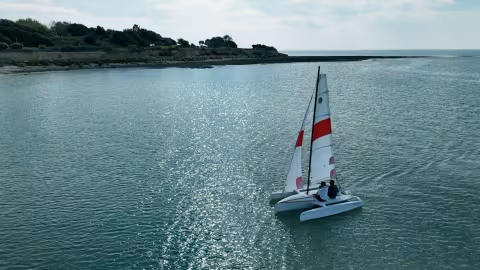
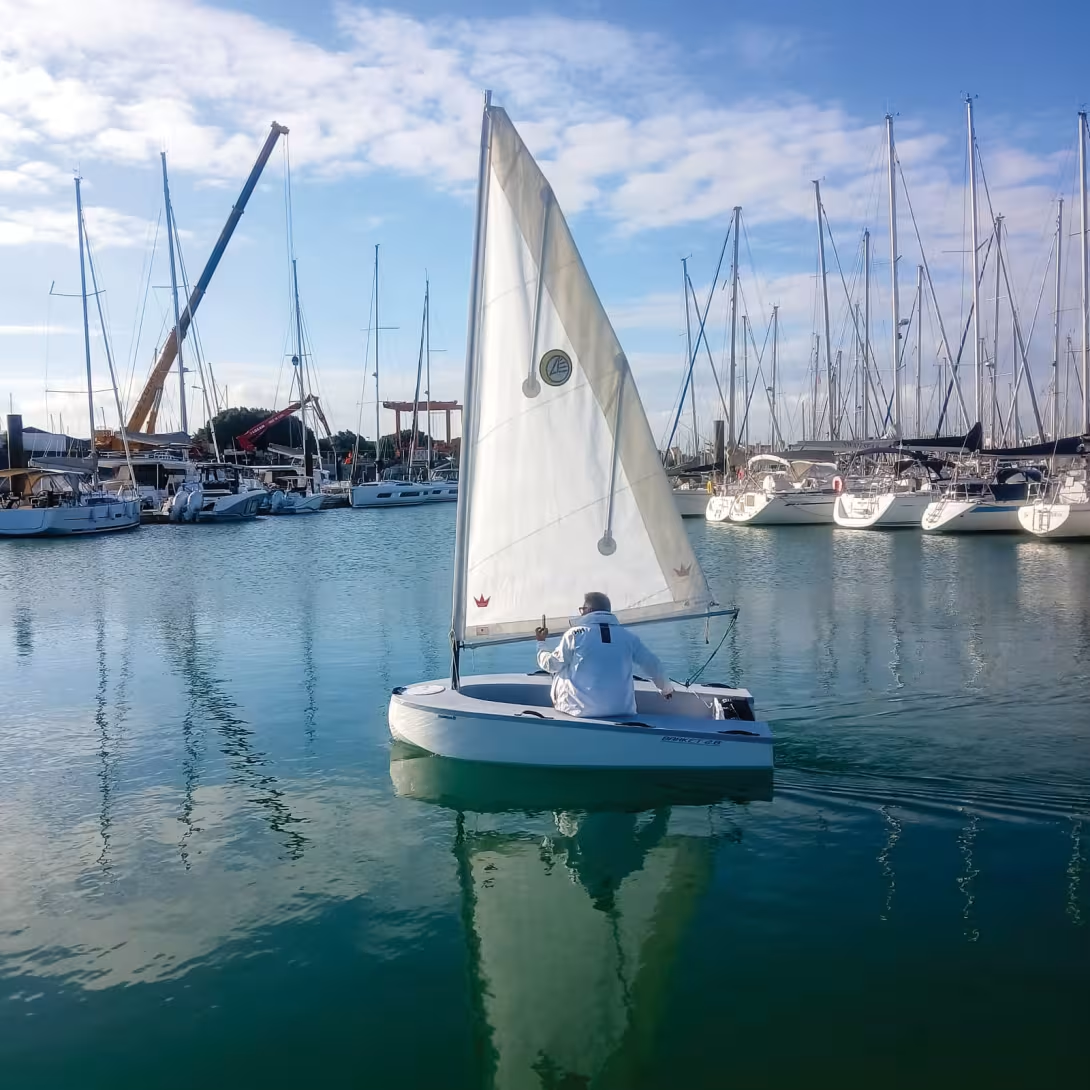
The Multihulls World community is well acquainted with naval architect/boatbuilder Emilien Faurens, who presented one of his trimarans, the Treasy 4.0, to us a little over a year ago. This time, we’re testing one of his dinghies. OK, so the Barket 2.8 really has only one hull, but the recessed transom still highlights two floats at the stern. What is the main advantage of this rigid dinghy? It can be sailed - like the Tender Cat in epoxy plywood that we tested in our Special Issue #22. Welcome aboard the Barket 2.8 Sail!
Image
Image
1
/
1
Practical information
- The builder : Faursail
- The spec sheet
-
 Watch our exclusive video
- Finance your Barket 2.8 Sail
- Insure your Barket 2.8 Sail
- Articles about the Barket 2.8 Sail
Conditions: 2 to 8 knots of wind, flat water
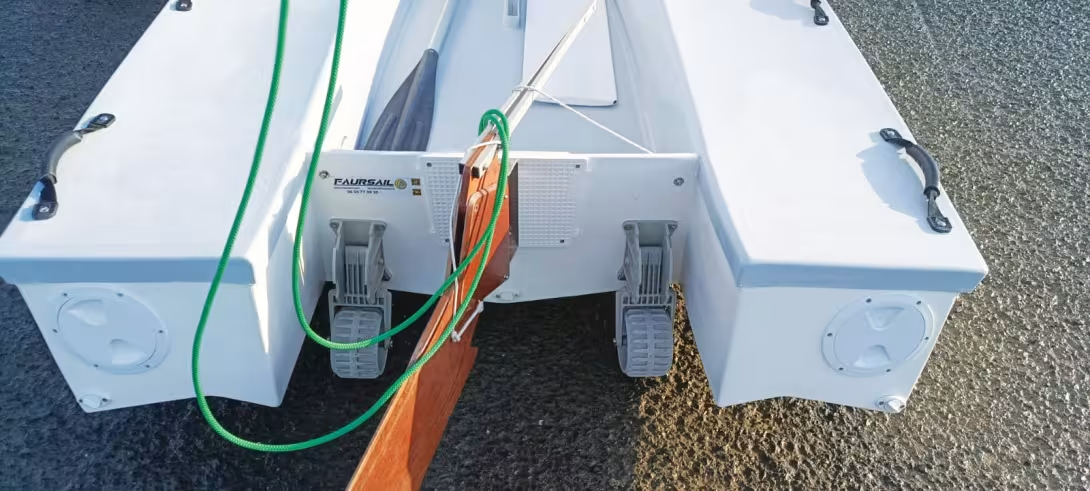
And What’s More, it’s on Wheels!
Once on the boat ramp, we prepared the dinghy in much the same way as you would an Optimist: we put up the mast on which a sail equipped with two large vertical battens was already furled. One particularly notable feature to mention is that the rig can be stored in the hull thanks to a hatch cut into the transom. The cunningham was then attached, for allowing the luff to be tensioned and the rig to be secured. The boom and the sheet block - attached to a short bridle - were put in place. All that remained was to adjust the leech tension.
Moving on to the hull, the daggerboard was put ready next to its well and the retractable rudder installed on the reinforced section usually used for the outboard.
The deck is well designed: it combines self-draining floors with wide, comfortable seats. There are only three things left for the sailor to do once he’s got enough water: insert the daggerboard, lower the rudder, and raise the wheels.
The liveliness of the Barket was quite surprising – it turns on the spot and accelerates at the slightest breeze. Stability is never compromised, though a slightly larger daggerboard might improve the course-keeping after going through a tack.
When the Barket is to be powered by its motor, the rig, daggerboard, and rudder are stowed away, and all you need do is install the outboard - gasoline or electric - and use the “well plug” to seal the daggerboard slot. With an outboard of only 4 HP, it can reach 13 knots with one person on board and 8 knots with two. However, it wouldn’t be possible to row with classic oars and rowlocks due to the thickness of the benches.
For trouble-free use as a tender, it would be advisable to install a rubbing strake so that contact with the mother ship does not cause chafe between the gelcoat of each boat.
Conclusion
Very attractive price
Option to really sail
Easy to set up
Option to really sail
Easy to set up
Could do with a slightly larger daggerboard
No possibility of rowing
Lack of gunwale protection
No possibility of rowing
Lack of gunwale protection
Technical Specifications
Material: GRP
Length: 9’2” (2.8 m)
Beam: 4’11” (1.5 m)
Weight: 110 lbs (50 kg)
Maximum engine power: 8 hp
Number of people: 2 to 4
Price without sail and motor: € 1,483 ex-tax
Price ready to sail: € 2,900 ex-tax
www.faursail.com
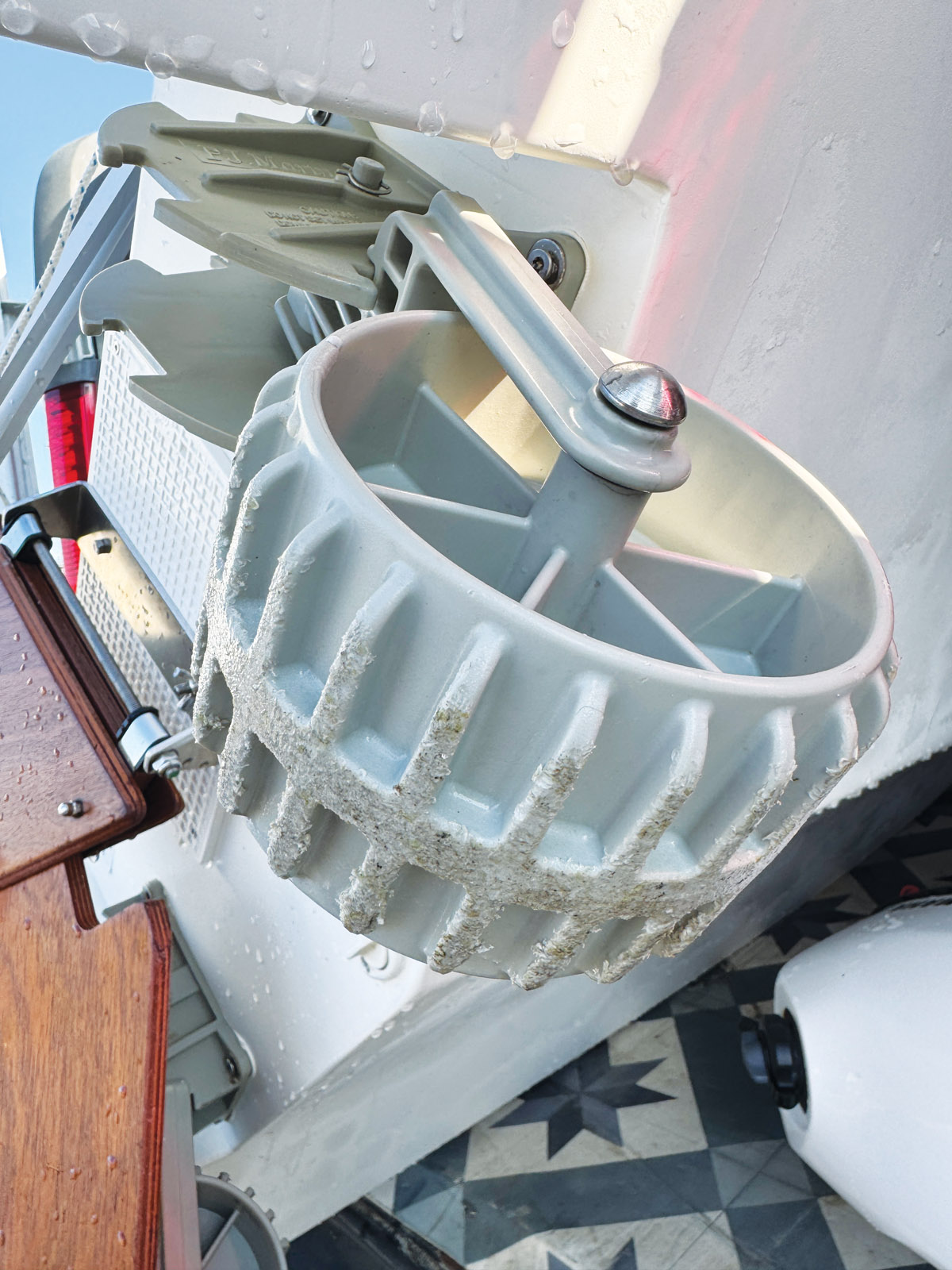
The model of wheel that’s been chosen does the job... but not for going far.
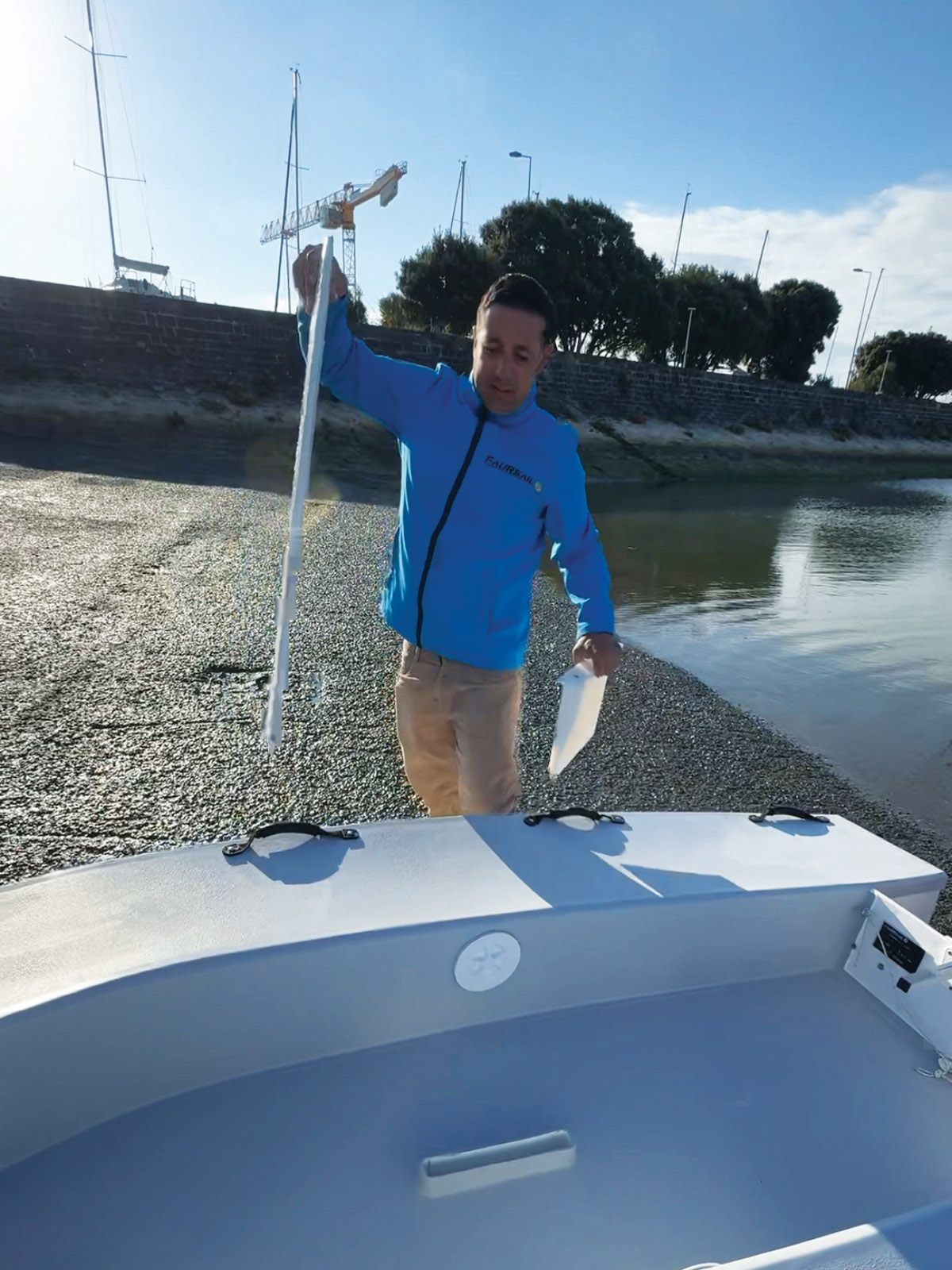
The daggerboard well can be closed off with a mini-plug when using the boat with an outboard.
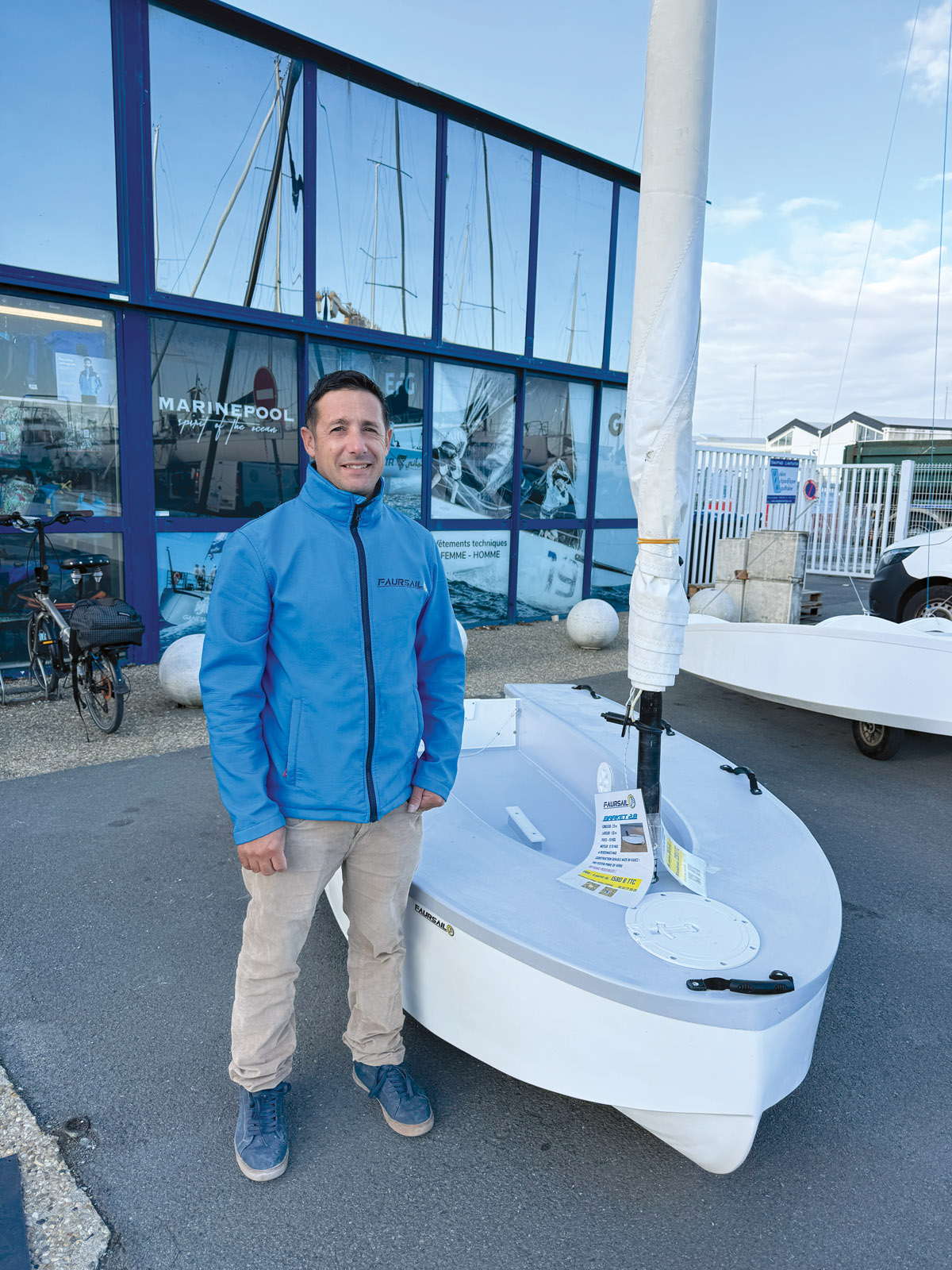
Emilien Faurens,
the architect/builder of the Barket 2.8.
the architect/builder of the Barket 2.8.